Key Takeaways (TL;DR)
- Choose a Zoho Creator development company in USA that gets your real business not only software build work.
- Search for proof of work in custom applications, Zoho integrations , and outcomes that fit your specific industry across the USA.
- Before you sign anything, confirm Zoho certifications, partnership standing, and hands-on implementation experience.
- Make sure they follow a structured development process, and that they can actually deliver reliable long-term support.
- Don’t choose a provider only because the price is low, instead, prioritize scalability, strong integrations, and real business insight.
- Invest in Zoho Creator Development Services in the USA that result in secure, scalable, future-ready business applications.
Across the USA, a lot of companies are starting to use low-code platforms more and more, to automate those everyday routines, push operational efficiency up, and generally make digital transformation happen faster. Out of all those options, Zoho Creator feels like one of the go-to choices, since it lets teams build custom business applications such as ERP-style systems, CRM solutions, inventory management, client portals, and also approval workflows.
That said, picking the platform is just one piece, not the whole puzzle. What you get at the end really hinges on selecting the right Zoho Creator development company , one that listens to your requirements, designs applications that can scale later on, and connects in a clean way with the tools you already run.
If you’re trying to find the best Zoho Creator development company in USA, you can use this guide to look at the main factors that matter, especially the mix of technical capability and industry experience , plus how they manage planning for the project, handle testing, and keep improving things after go-live.
Why Choosing the Right Zoho Creator Development Company Matters
Implementing Zoho Creator is more than just putting another software project in motion; honestly, it’s a long-term bet on how your business runs. The right Zoho Creator development company doesn’t only “build apps”; it sort of sketches out solutions that help untangle workflows, boost day-to-day efficiency, and still make room for growth later.
When you go with a seasoned implementation partner, your app is more likely to grow with your real needs, not just with a short-term plan.
A good and reliable development partner tends to help you end up with a solution that’s meant for lasting success, because they focus on things like :
- Streamline workflows and trim the manual grind.
- Build applications that expand with your business.
- Connect smoothly with Zoho apps plus third-party systems.
- Protect sensitive business data using secure access controls and proper permissions too.
- Lower long-run maintenance costs, and avoid those painful, expensive redevelopment cycles that show up later.
In the end, partnering with experienced Zoho Creator Development Services helps ensure your solution is secure, scalable, and designed to support what your business wants, over the long term.
8 Things to Look for Before You Choose the Best Zoho Creator Development Company in USA
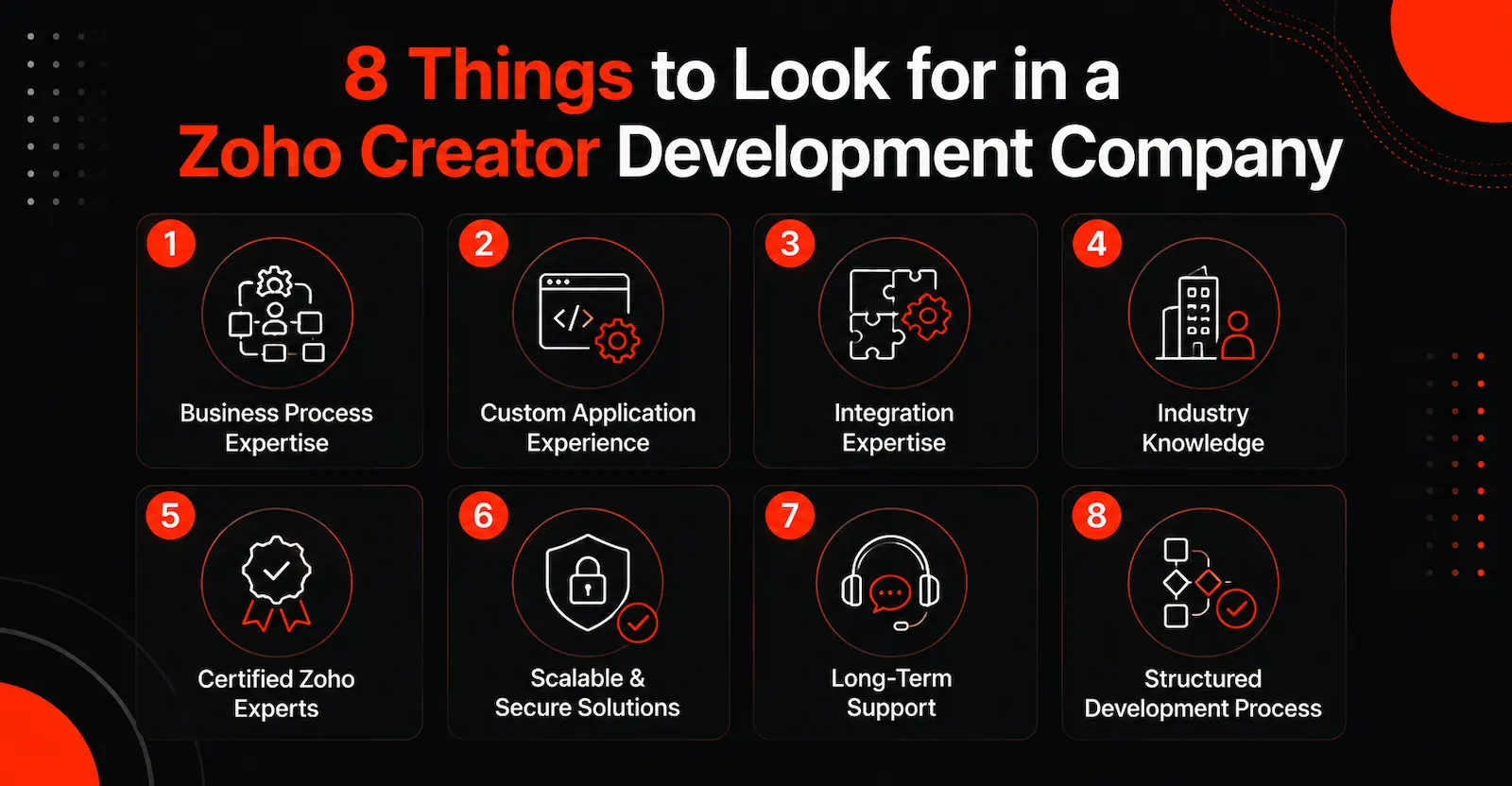
Choosing the right implementation partner can determine whether your Zoho Creator project delivers long-term business value or becomes an expensive redevelopment project.
Beyond technical skills, the best Zoho Creator development company should understand your business processes, build scalable solutions, and provide ongoing support to help your business grow. Here are eight essential factors to evaluate before making your decision
1. Choose a Company That Understands Your Business Processes
A successful Zoho Creator application starts with understanding how your business operates, not just how to write code. Before development begins, the company should analyze your workflows, identify operational challenges, and recommend solutions that improve efficiency.
Look for a development partner that understands processes such as:
- Sales and lead management
- Daily business operations
- Manufacturing workflows
- Inventory and warehouse management
- Finance and approval processes
A successful Zoho Creator application starts with understanding how your business works, not only how to write code. Before development gets going, the company should take a look at your workflows, see what operational problems exist, and suggest solutions that make things faster, steadier, and more efficient. This style of planning becomes even more useful when teams lean into business automation with Zoho to remove manual steps and speed up day-to-day operations.
2. Evaluate Their Experience Creating Custom Business Applications
Every business has unique requirements, so your application should be arranged around your actual workflows instead of leaning too hard on generic templates.
An experienced Zoho Creator development company ought to have a real track record of building custom business apps for a range of industries, not just “similar” projects.
When you speak with them, ask about their background developing solutions like:
- ERP systems
- CRM applications
- HRMS platforms
- Vendor portals
- Customer portals
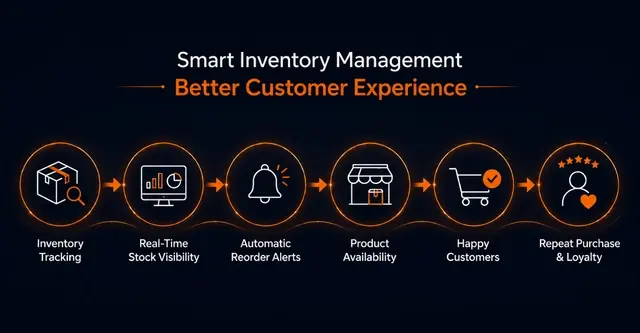
- Inventory management systems
Also, taking a look at their portfolio and past work usually gives you this calmer feeling that they can manage messy, complex business requirements, and then deliver solutions that fit your organization.
3. Check for Solid Zoho & Third-Party Integration Expertise
Most businesses end up using multiple software tools, so integration becomes one of those critical parts of any Zoho Creator implementation.
Your development partner should be able to connect Zoho Creator with both Zoho applications and outside business systems so the information keeps moving smoothly.
See if they’ve done integrations such as:
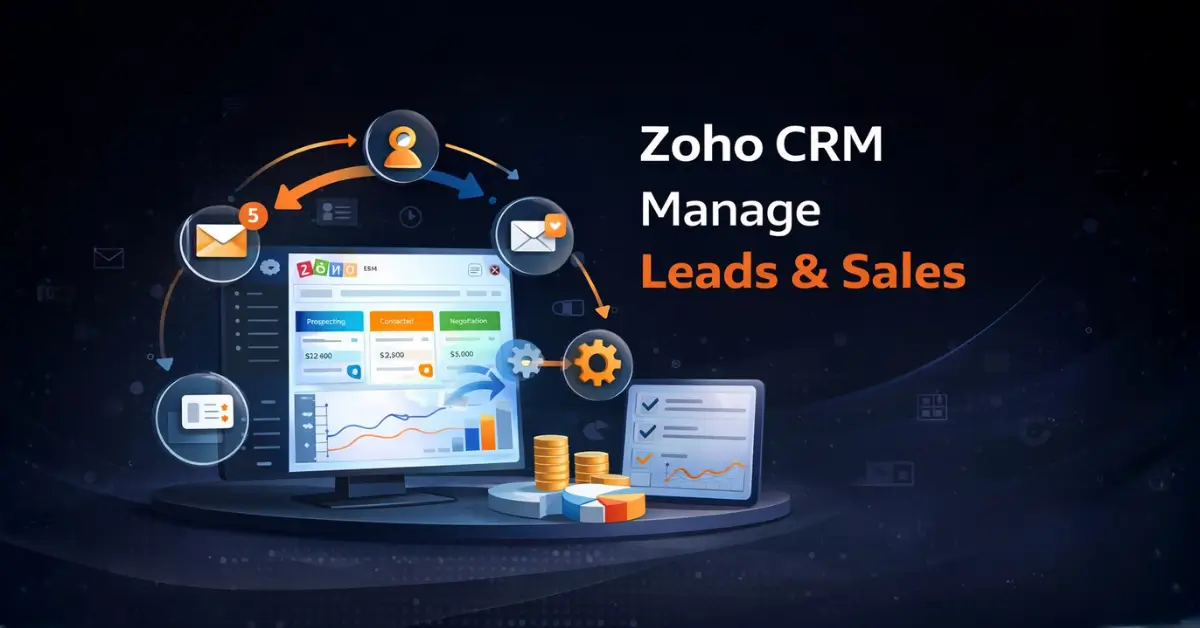
- Zoho CRM
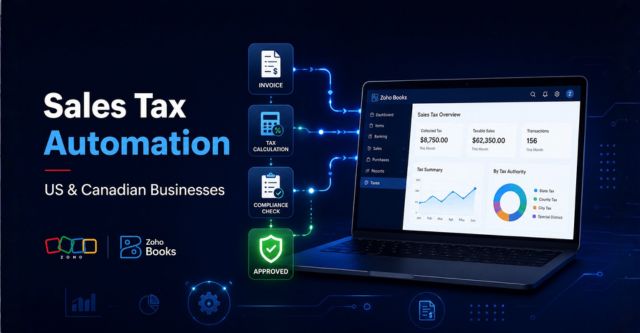
- Zoho Books
- Zoho Inventory
- Zoho Flow
- Payment gateways
- Third-party APIs
Strong integration capabilities help avoid duplicated data entry, boost reporting precision, and support connected business workflows.
4. Search for Industry Specific Experience
Every industry has its own operational process , compliance needs, and reporting expectations. If a development company has already worked in your space, it can understand what you’re up against quicker, and then recommend approaches that actually match your business objectives.
This sort of industry experience is especially useful for organizations in:
- Manufacturing
- Healthcare
- Retail
- Distribution
- Professional services
- Construction , etc.
When a firm already understands your industry, the rollout tends to feel faster, requirements get captured in a clearer manner, and the final app usually needs less back and forth revisions.
5. Review Zoho certifications and Partner Statutes
Not every Zoho developer offers the same depth of expertise. Yes, freelancers and independent developers can be very capable technically , but certified partners often have more implementation experience, more direct access to Zoho resources, and they commonly use a more structured development methodology.
Before you pick someone, it’s smart to sort out the distinction between:
- Freelancers
- Independent Zoho developers
- Zoho Partners
- Zoho Premium Partners
Selecting a certified implementation partner often gives you more confidence that the project follows Zoho best practices, and that it’s designed for long term stability as well as scalability.
6. Ensure They Build Scalable & Secure Applications
Your business will keep growing, and your applications should do that too. A well designed Zoho Creator solution should help with future expansion, without making you redo everything from the start.
When you ask about it, try to get clarity on how they handle:
- User roles and permissions
- Data safeguards and encryption approach
- Application performance, response time, and tuning
- Future scaling, load handling, and growth planning
- Security standards and practical best practices
Putting scalability and security into the application early on can actually protect your investment, while also keeping the day-to-day performance steady as your business evolves, and yes, even when the processes change.
7. Review Their Support & Maintenance Services
Development does not really stop after deployment. Ongoing support matters a lot, so your application keeps running smoothly when your business shifts, or when new needs quietly show up.
A trustworthy Zoho Creator development company should provide:
- User training
- Documentation, guides, and handover notes
- Performance optimization and ongoing monitoring
- Bug fixing and issue resolution
- Continuous improvement, updates, maintenance routines
Long-term support is what helps your application stay current, remain secure, and stay aligned with changing business requirements, instead of slowly drifting out of sync.
8. Ask About Their Development Process Before Signing
Before you sign anything, ask about how they actually develop the solution, because having a structured development process lowers the project risks, helps keep communication clear, and makes sure every business requirement gets properly documented before any development starts.
When things stay transparent during the whole implementation lifecycle, it’s also easier to avoid those unpleasant surprises like unexpected delays or scope changes, you know.
Try asking if their process covers things like:
- Discovery workshops
- Requirement gathering
- Wireframing and solution planning
- Application development
- Testing and quality assurance
- Deployment
- User training
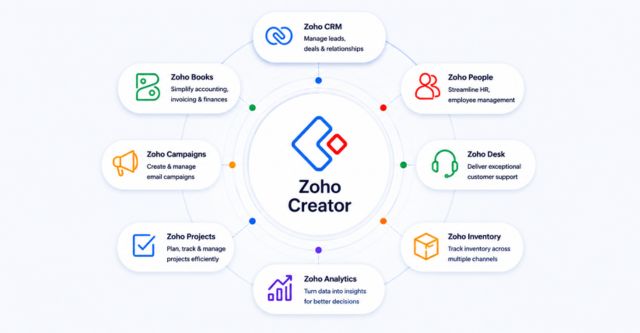
A structured implementation process also makes future integrations easier, especially when you understand the Zoho Creator ecosystem and how different Zoho applications work together.
Common Mistakes Businesses Make When Choosing a Zoho Creator Development Company in USA
Picking the wrong implementation partner can cause project delays, more expenses, and apps that just don’t match your longer-term business plans. Before you choose a Zoho Creator development company, try not to fall into these common traps:
- Choosing a firm based only on the cheapest rate.
- Hiring developers but skipping business consulting, or not confirming they understand your domain clearly.
- Overlooking whether they can handle Zoho integrations, and also third-party systems.
- Forgetting to ask if the solution can actually scale once your business starts growing.
- Ignoring data security, user roles, and access permissions until things get messy.
- Accepting the project without solid documentation, or without a real knowledge transfer plan.
- Working with a company that doesn’t offer post-implementation support and ongoing maintenance.
- Skipping discovery and requirement gathering before development really starts, which is kinda risky.
- Not checking their earlier Zoho Creator work, case studies, or client testimonials.
- Focusing purely on technical skills, instead of industry-specific experience.
Avoiding these errors should make it easier to select a dependable partner and get stronger outcomes from your Zoho Creator investment.
To get a better understanding on how CRM integrations can improve your sales process, explore CRM for lead management and see how businesses centralize customer interactions.
Why Choose Business Scales as your Zoho Creator Development Company
Choosing the right Zoho Creator implementation partner is, well, mostly about getting a team that’s seen it before, with real experience, a disciplined development approach, and a consistent track record of actual business results.
At Business Scales, we mix business consulting with Zoho expertise, so we can map out solutions that improve productivity, reduce friction in daily tasks, and keep momentum toward long-term growth even if requirements change midstream, or halfway through.
Here’s the short version of why companies choose Business Scales:
- 10+ years delivering business automation solutions.
- 100+ successful Zoho implementations across multiple industries.
- 50+ certified Zoho professionals, dedicated to consulting, building, and ongoing support.
- Strong experience with custom ERP, CRM, inventory, finance, and manufacturing automation
- Planning from discovery to development, then deployment and user training, end to end.
- Post go-live support, performance tuning and continuous upgrades,
- Trusted across the USA by companies that need scalable Zoho Creator solutions.
Whether you’re just trying to automate one small internal workflow, or you’re planning a full custom setup, our Zoho Creator Development Services are built to deliver secure, scalable, future-ready apps that expand with your business, not fight it, or slow it down.
Final Thoughts
Choosing the best Zoho creator development company in USA is really more than just looking at prices or technical skills. The right implementation partner should not only understand how your business runs day to day, but also should help you build scalable, secure applications and keep things steady with ongoing support, especially as your company grows and stuff changes.
Before you make the call, take a hard look at their industry experience, their implementation approach, how well they can handle integrations, what certifications they have, and what kind of long term support they actually offer.
Investing money into the right Zoho Creator Development Services today can make your operations feel more efficient, lower day-to-day operational expenses, and create a solution that still delivers value for years, without too many surprises later.
Frequently Asked Questions
How do I choose the best Zoho Creator development company in USA ?
Choose the company with proven Zoho Creator experience, industry insight, certified developers, and really solid integration capabilities, a structured development process, and reliable post-launch support.
What should I look for before hiring a Zoho Creator development company ?
Look for experience in custom app development, successful Zoho Creator implementations, smooth integrations, best project management, long- term support, and proven work records.
How much does Zoho Creator development cost for businesses in USA ?
The cost can change a lot; it depends on how complex the project is, how many modules you need, what kind of custom integrations you want, plus automation requirements and the implementation timeline. Most projects are priced based on business requirements.
Should I hire a freelancer or a Zoho Premium Partner ?
Freelancers are sometimes fine for small tasks or minor customizations. But for building complex business applications, ERP systems, or enterprise-level automation, a Zoho Premium Partner is usually the safer, more structured choice. Premium Partners tend to bring certified expertise,organized implementation approach, and long-term support.
How long does a Zoho Creator implementation project usually take?
That really depends on the scope and how complex everything is. For something like simple workflow automation, it can be just a few weeks, but for a custom ERP setup or a multi-module business application, it can run a few months.
Can a Zoho Creator development company integrate Zoho Creator with my existing software?
Yes, absolutely. A skilled Zoho Creator development company can connect Zoho Creator with Zoho CRM, Zoho Books, Zoho Inventory, Zoho Flow, payment gateways, ERP environments, and also other third-party apps using APIs and native integrations.